Getting consistent visitors from search engines is an important goal for many businesses. However, simply publishing blog posts is not enough to attract and retain organic traffic. Businesses need content that is useful to their audience, aligned with search intent, and optimized for search engines.
This is where an SEO Content Strategy becomes valuable. A well-planned strategy combines keyword research, high-quality content, search intent, on-page optimization, internal linking, and ongoing performance analysis to help a website become more visible in search results.
For businesses that want to build sustainable online visibility, an effective SEO content strategy can become an important part of their broader digital marketing efforts.
What Is an SEO Content Strategy?
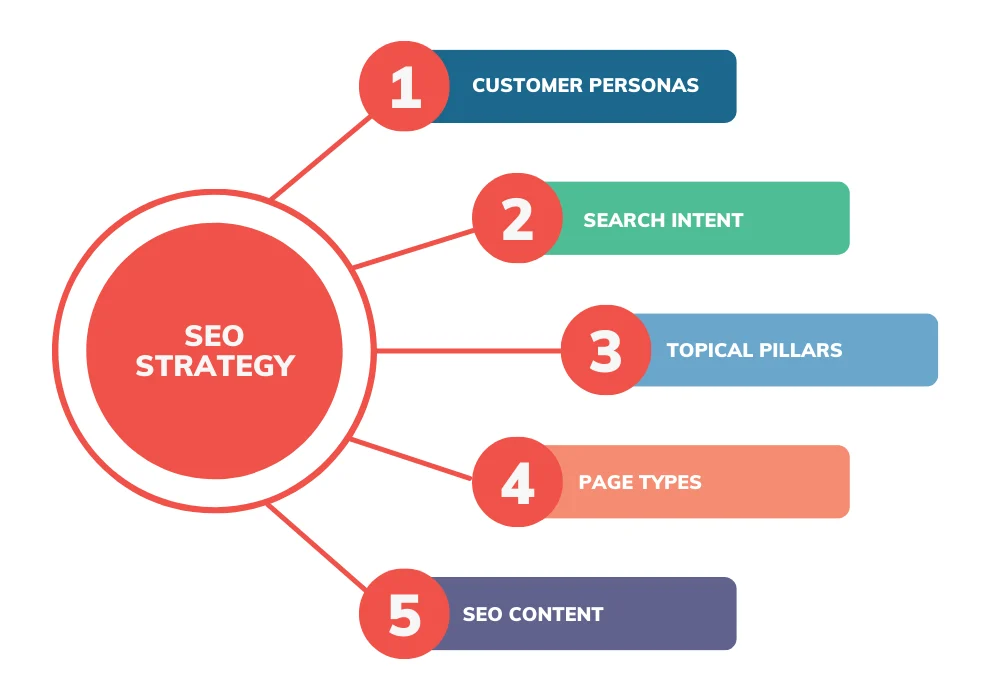
An SEO Content Strategy is a structured plan for creating and optimizing content to attract relevant visitors from search engines.
Rather than producing content based only on random topics, businesses use SEO data and audience research to determine:
- What their target audience is searching for
- Which topics are relevant to their business
- What keywords should be targeted
- What type of content searchers need
- How content should be structured
- How different pages should be connected
- How content performance should be measured
The goal is to create useful content that satisfies users while making it easier for search engines to understand and discover the website.
Why Is an SEO Content Strategy Important?
Search engines process enormous amounts of information every day. Businesses need a structured approach to make their content useful, relevant, and discoverable.
An effective strategy can help businesses:
- Increase organic visibility
- Attract relevant website visitors
- Build topical authority
- Answer customer questions
- Support lead generation
- Improve website engagement
- Strengthen brand awareness
- Create long-term search visibility
Unlike paid advertising, organic search traffic can continue to provide value after content has been published, although rankings and traffic can change over time.
1. Start With Keyword Research
Keyword research is one of the foundations of an SEO Content Strategy.
Businesses need to understand the words and phrases their potential customers use when searching for information, products, or services.
For example, a digital marketing agency may research keywords related to:
- SEO services
- Digital marketing
- Content marketing
- Local SEO
- Social media marketing
- Search engine optimization
Keyword research should not focus only on search volume. Businesses should also consider relevance, search intent, competition, and whether a keyword aligns with their products or services.
2. Understand Search Intent
Knowing what users are searching for is only part of SEO. Businesses also need to understand why people are searching.
Search intent generally falls into several categories.
Informational Intent
The user wants to learn something.
Examples include:
- What is SEO?
- How does content marketing work?
- How to improve website rankings
Navigational Intent
The user is looking for a specific website, company, or page.
Commercial Intent
The user is researching options before making a purchase.
Examples include:
- Best SEO agency
- SEO services for small businesses
- SEO software comparison
Transactional Intent
The user is ready to take an action, such as purchasing a product or booking a service.
Creating content that matches search intent can make a page more useful to the people who find it through search engines.
3. Create Content Around Relevant Topics
An SEO Content Strategy should go beyond targeting individual keywords.
Businesses can build groups of related content around important topics. This approach helps create a more organized website and allows businesses to address different questions their audience may have.
For example, a company targeting SEO could create content about:
- SEO basics
- Keyword research
- On-page SEO
- Technical SEO
- Link building
- Local SEO
- SEO content writing
- SEO analytics
These related topics can be connected through internal links to create a stronger content structure.
4. Create High-Quality, Helpful Content
Search optimization should not come at the expense of the reader.
Content should provide clear, useful information that answers the user’s question or helps them solve a problem.
High-quality content should generally be:
- Accurate
- Relevant
- Easy to understand
- Well organized
- Original
- Useful to the intended audience
- Updated when necessary
Instead of writing an article simply to include a keyword, businesses should focus on satisfying the needs of the people searching for that topic.
5. Optimize Page Titles and Meta Descriptions
Page titles and meta descriptions help communicate what a page is about.
An effective SEO title should clearly describe the content and naturally incorporate the primary topic or keyword where appropriate.
For example:
SEO Content Strategy: How to Increase Organic Traffic
A meta description can provide a concise summary of the page and encourage searchers to learn more.
These elements should be written for users while accurately representing the content of the page.
6. Use Proper Heading Structure
Headings make content easier to read and help organize information.
A typical article structure might include:
- H1 for the main topic
- H2 for major sections
- H3 for supporting subtopics
For example:
H1: How an SEO Content Strategy Can Increase Organic Traffic
H2: Why Is an SEO Content Strategy Important?
H2: How to Build an SEO Content Strategy
H3: Conduct Keyword Research
H3: Understand Search Intent
A logical heading structure helps readers navigate longer articles.
7. Build a Strong Internal Linking Strategy
Internal links connect related pages on the same website.
For example, a blog post about SEO content could link to related pages covering:
- SEO services
- Content marketing
- Local SEO
- Keyword research
- Digital marketing
Internal linking can help visitors discover additional relevant content and helps search engines understand relationships between pages.
It can also help distribute internal authority throughout a website.
8. Create Content That Targets Different Stages of the Customer Journey
Not every searcher is ready to purchase immediately.
An effective SEO Content Strategy can create content for different stages of the customer journey.
Awareness Stage
Users are learning about a problem or topic.
Examples:
- What is SEO?
- How does content marketing work?
Consideration Stage
Users are researching possible solutions.
Examples:
- SEO vs PPC
- Benefits of hiring an SEO agency
- How to choose an SEO service
Decision Stage
Users are closer to taking action.
Examples:
- SEO agency pricing
- SEO consultation
- Professional SEO services
Creating content for different stages can help businesses attract users earlier and provide information as they move toward a decision.
9. Optimize Existing Content
SEO does not end when an article is published.
Existing content should be reviewed periodically to identify opportunities for improvement.
Businesses can update content by:
- Adding new information
- Improving outdated sections
- Updating statistics
- Improving headings
- Adding relevant internal links
- Refining keyword targeting
- Improving readability
- Expanding sections that need more detail
Updating useful content can help keep it relevant as search behavior and information change.
10. Use Supporting Visual Content
Images, diagrams, screenshots, infographics, and videos can make content easier to understand.
Visual content can also provide additional opportunities for optimization through descriptive file names and relevant alt text.
For example, instead of naming an image:
image123.jpg
a descriptive filename might be:
seo-content-strategy.jpg
Alt text should accurately describe the image rather than being used simply to insert keywords.
11. Promote Your Content
Publishing an article does not guarantee that people will find it.
Businesses can promote valuable content through channels such as:
- Social media
- Email marketing
- Industry communities
- Digital PR
- Relevant partnerships
- Other appropriate promotional channels
Promotion can help content reach audiences who may find it useful and can contribute to broader content visibility.
12. Measure Organic Traffic and SEO Performance
An SEO Content Strategy should be measured using relevant data.
Businesses can monitor metrics such as:
- Organic traffic
- Search impressions
- Search clicks
- Keyword rankings
- Click-through rate
- Engagement
- Leads
- Conversions
Tools such as Google Search Console and Google Analytics can provide useful information about how users discover and interact with website content.
The most important metrics depend on the business’s specific objectives.
Common SEO Content Strategy Mistakes
Targeting Keywords Without Understanding Intent
A keyword may look valuable based on search volume, but if the content does not match what users are looking for, it may not perform as expected.
Publishing Too Much Low-Value Content
Creating a large number of articles without considering quality, relevance, and audience needs can make a content strategy less effective.
Ignoring Existing Content
Businesses sometimes focus entirely on new articles while overlooking older pages that could benefit from updates and optimization.
Poor Internal Linking
Disconnected pages can make it harder for users and search engines to discover related content.
Focusing Only on Rankings
Rankings are useful, but the ultimate goal should be attracting relevant visitors and supporting meaningful business outcomes.
How Cre8trends Can Help With SEO Content Strategy
Developing an effective SEO content strategy requires research, planning, content creation, optimization, and ongoing analysis.
Cre8trends helps businesses strengthen their digital presence through strategic digital marketing and content-focused solutions. A structured SEO approach can help businesses identify relevant topics, create useful content, improve website visibility, and connect with potential customers through organic search.
By combining content strategy with broader SEO and digital marketing efforts, businesses can build a more organized online presence that supports long-term growth.
Frequently Asked Questions
What is an SEO Content Strategy?
An SEO Content Strategy is a structured plan for creating, optimizing, publishing, and improving website content to attract relevant organic traffic from search engines.
How does SEO content increase organic traffic?
SEO content can increase organic traffic by targeting relevant search queries, matching search intent, providing useful information, and improving a website’s visibility in search results.
How long does SEO content take to generate traffic?
There is no fixed timeframe. Results can vary based on factors such as website authority, competition, content quality, search demand, technical SEO, and the overall strength of the website.
Should every blog post target a keyword?
Each page should have a clear topic and purpose. Relevant keywords can help search engines and users understand the topic, but content should be written naturally rather than created solely around keyword repetition.
How often should SEO content be updated?
There is no universal schedule. Content should be reviewed when information becomes outdated, search intent changes, performance declines, or there is new information that would make the page more useful.
Final Thoughts
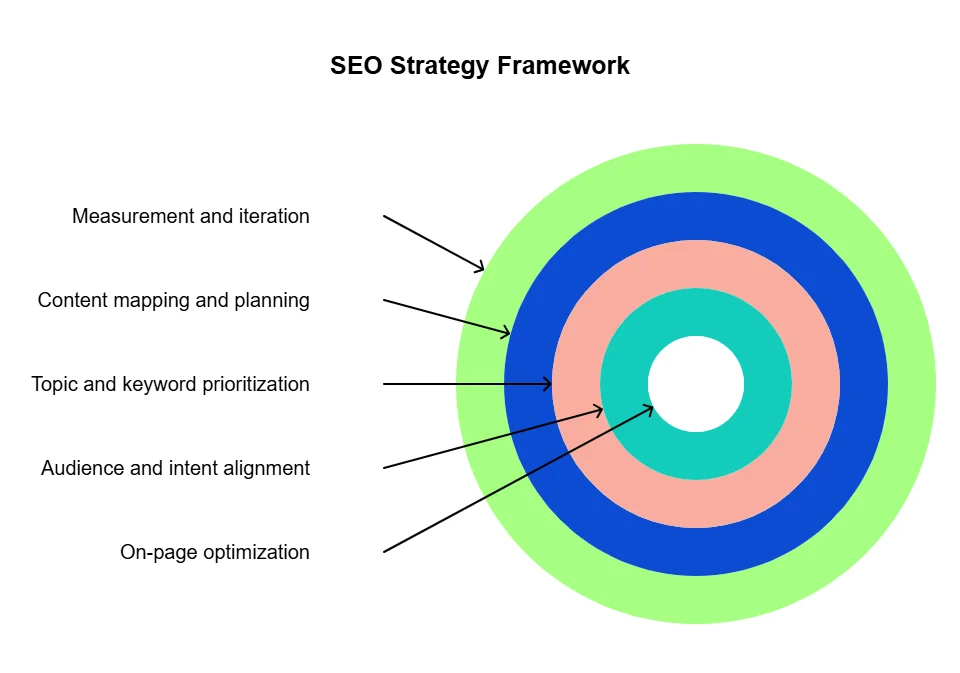
A well-planned SEO Content Strategy can help businesses attract relevant organic traffic by combining keyword research, search intent, helpful content, on-page optimization, internal linking, and continuous improvement.
The goal is not simply to publish more articles. It is to create useful resources that answer real questions, address customer needs, and support the broader objectives of the business.
With a consistent strategy and ongoing measurement, businesses can build a stronger content foundation and improve their ability to reach potential customers through organic search.
Cre8trends can help businesses develop a strategic approach to SEO and content marketing that connects valuable content with the audiences searching for it.